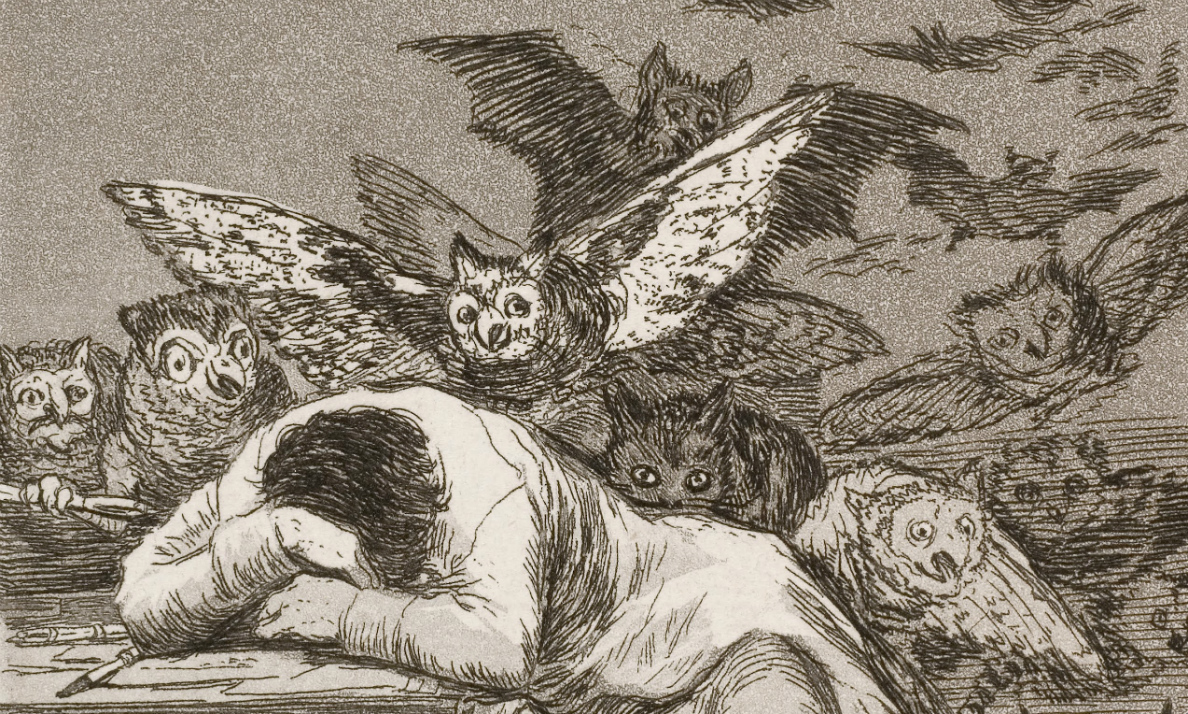
Everyone I talk to is scared about AI.
My friends are. The founder at 3am wondering if her team will exist in two years is. The junior PM scrolling through AI news on X, feeling that impending sense of doom, knowing that everything is shifting under his feet. The creative director who built a career on taste, now watching tools generate in seconds what took him weeks. I could continue for a long time. There are enough articles and posts about “[NEW AI TOOL] JUST KILLED [INDUSTRY, PROFESSION OR PASSION] HERE’S WHY” with five skull emojis.
Even tho I am an early adopter, I was scared too. But then I understood something. The fear is real, but the timeline is not. You have time.
The fear is real
Last year, 54% of solo founders reported burnout. 75% reported anxiety. You are maybe one of them.
Anthropic recently published the largest qualitative study ever conducted on how people feel about AI. 81,000 people across 159 countries. Hope and alarm don’t divide people into two camps like you might think. They coexist within each person.
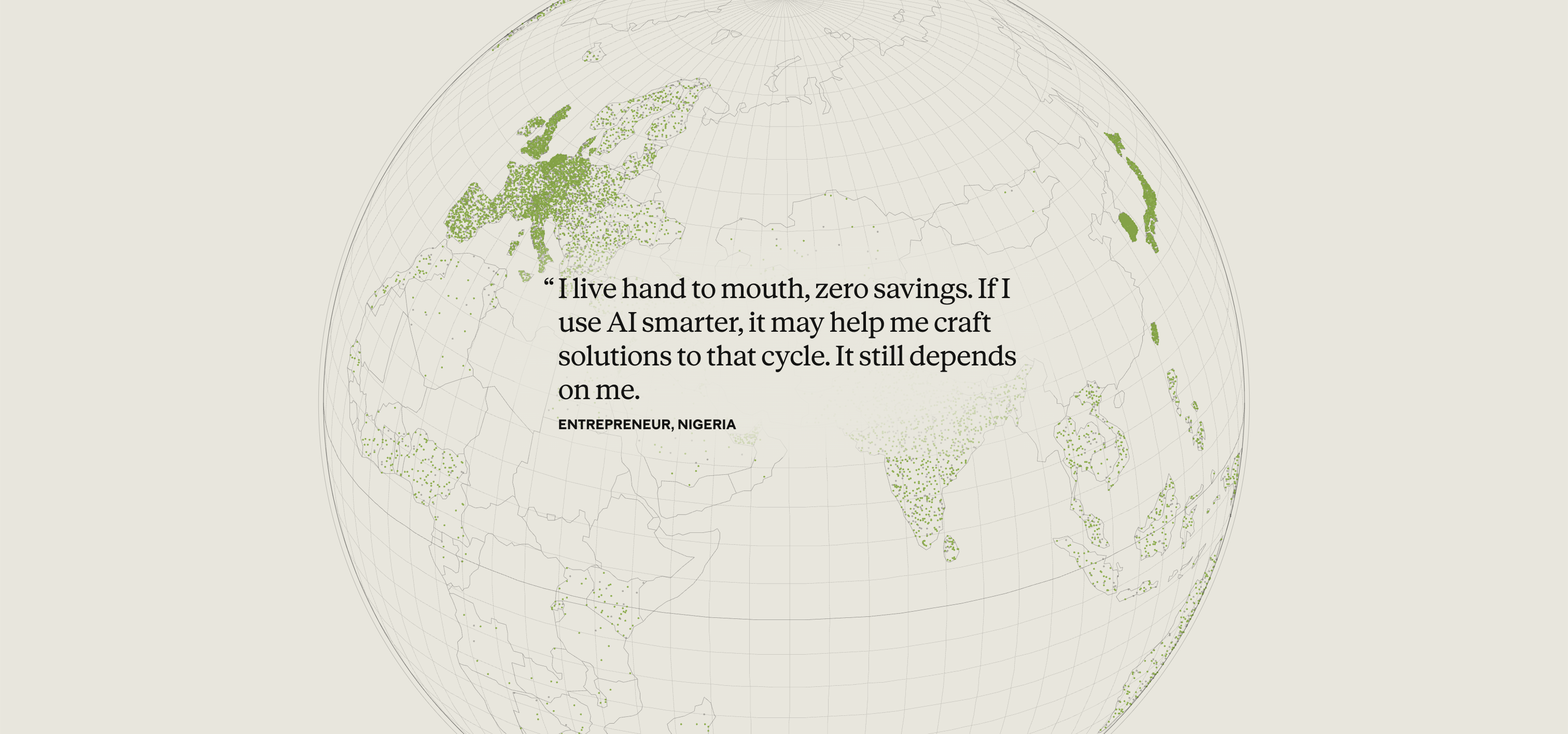 Anthropic’s study on how people feel about AI. 81,000 interviews, 159 countries. The quote is from an entrepreneur in Nigeria.
A lawyer in Israel put it perfectly: “I use AI to review contracts, save time… and at the same time I fear: am I losing my ability to read by myself? Thinking was the last frontier.”
That tension is not a weakness. AI is useful and AI is disorienting. AI is amazing to have fun and create stuff, yet it can disgust you of doing your hobby. Both are correct. A very long time ago, people thought that writing would make them dumber because they would stop using their memory to remember everything. We’re having the same conversation again, with better tools.
After visiting the MWC Barcelona 2026 and seeing all these innovations in robotics, AI, logistics, customer service, data and more by the biggest companies in the world, I felt it. Yeah, we’re heading towards an automated world. The enterprise employee watching layoffs accelerate, the agency owner seeing clients expect more for less, the content creators on YouTube who spend weeks on a video that AI can now summarise in ten seconds. You’re not paranoid. The ground IS shifting.
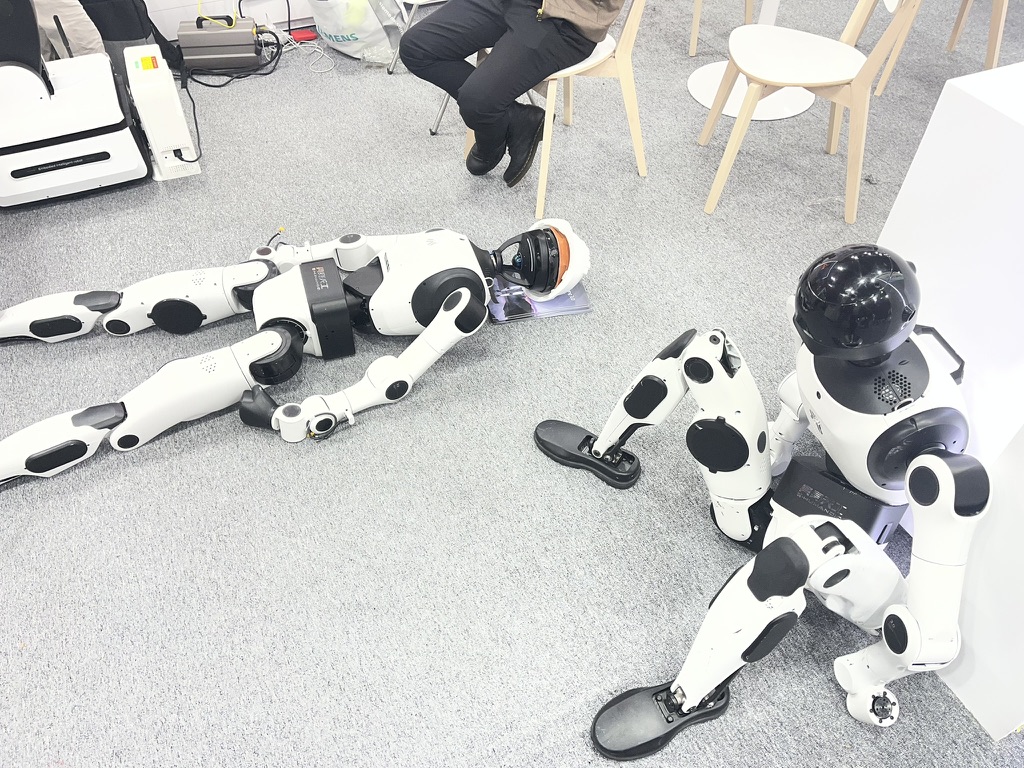 MWC Barcelona 2026. The robots are not ready either.
But the timeline isn’t what the headlines suggest.
The real threat
I think the real threat is delegation without judgment. Using AI to avoid your thinking instead of using it to think better. Generating 200 outputs a day and using none of them because you never stopped to evaluate (I should know).
When my brain met infinite generation for the first time, I stayed hyperfocused on Midjourney for days. Prompting, zero time evaluating. The dopamine of instant output masked the absence of actual progress. I made hundreds of images that week. I used zero of them.
The organisations failing at AI are often trying to bolt it onto broken processes. Putting a turbo on a horse cart (I’ve seen this exact pattern many times). 18 months of pilots, committees, feasibility studies, then concluding “AI isn’t ready yet.” No. The organisation wasn’t ready.
Meanwhile, a 3-person startup somewhere uses Claude to do the work of entire departments and it works. They built around AI from the start instead of trying to inject it into bureaucracy optimised to resist change.
Are you using AI to sharpen your judgment, or to avoid using it?
What matters
Three things. That’s it.
Taste. The ability to evaluate what’s good. AI generates. You decide what stays. The discipline to stop generating and start evaluating is the new core skill (for now, at least). Anyone can prompt. Few can select. The tool changed, the filter didn’t.
Ownership. Your process, your data, your judgment. If you bring shallow thinking, you get polished shallow output (a beautiful, well-formatted piece of slop). If you bring a real insight to the table, you get something worth using. The quality of what comes out is directly proportional to what you put in.
Curiosity. The willingness to learn, break things, iterate without the fear of being wrong. AI anxiety mostly comes from not understanding it. The solution is action. Stop watching tutorials or following experts and just download the thing, open the tool, spend credits, learn what it can do, make mistakes (save your data before). Then learn what it can’t do. That second part is where the real learning happens.
The gap is growing. Founders are drowning in “what’s possible” content when the answer is to just try and adapt the tools to your needs.
The antidote
First, stop watching the news.
I don’t mean ignore AI. I mean stop the doom-scroll. If it’s not still news in two weeks, it wasn’t news in the first place. The issue is real. The noise around it is mostly manufactured for engagement. You were supposed to be replaced a long time ago and you’re still here. I can find posts from 2022 saying “designers are cooked” but good designers still have clients.
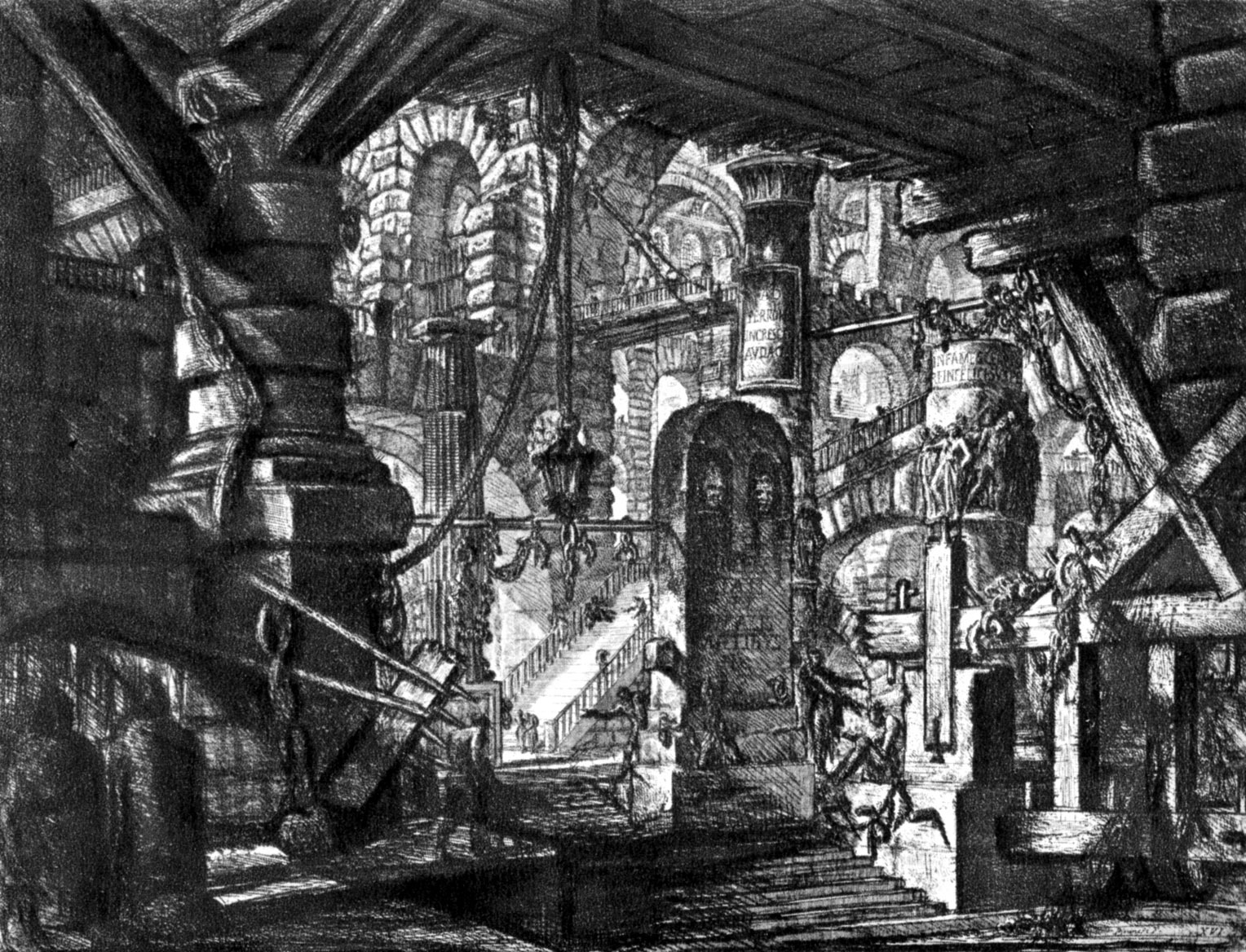 Giovanni Battista Piranesi, Carceri d’invenzione, c. 1750. The imaginary prisons. This is what the AI news cycle feels like.
Action beats rumination. Always. (I think.)
Pick one workflow. Just one. Learn it deeply. See what it can’t do as much as what it can. Use the friction as information and write it down somewhere. That’s how you develop fluency instead of anxiety. I picked the terminal linked to an Obsidian vault I developed over 5 years and I’m really satisfied with these nerd tools that fit my profile.
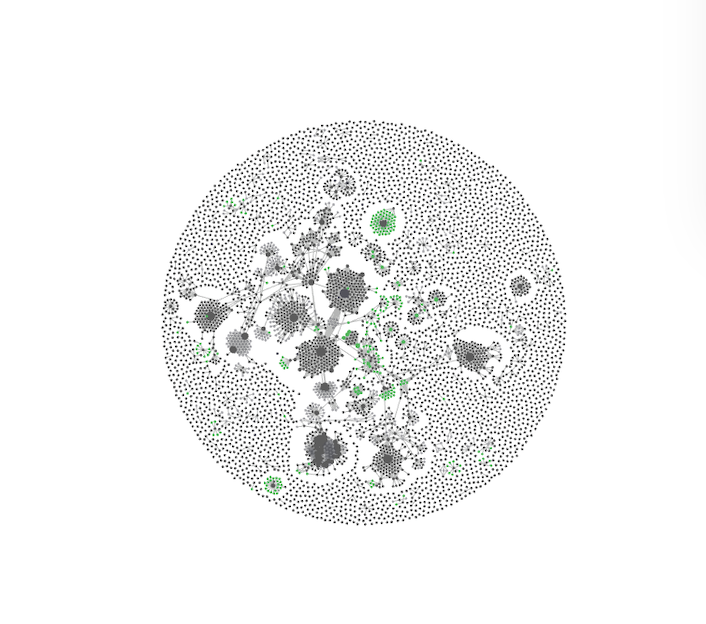 Our beautiful Obsidian nerd graph.
For some people, this is even harder (hello neurodivergent friends). Our brains are wired for novelty-seeking. Every new tool, every new model, every new capability triggers the same hyperfocus that makes us good at learning and terrible at sustaining. The antidote is structure: knowing when to stop and go for a walk, see friends, touch grass, cook a meal. Pick one workflow. Stick to it. Trust me, one is enough. Then you can expand.
You have time
AI anxiety is real. AI panic is optional.
Don’t believe that because some people learnt first or fast they have a strong competitive advantage over you. The tools are evolving too fast for that. Learn what matters, be curious, develop your taste, your judgment, your depth. Try things and you will be OK.
You have time to learn. Start now, start small, start with one tool that respects your process and your budget.
And when the anxiety hits again at 3am after seeing a thousand doom posts or some new realistic video generator, remember that you’re exactly where 81,000 other people are. Holding hope and alarm at once.
Apparently, that’s the human condition in 2026.
We’ll all be ok.