In a world where the machines can generate everything, I believe there are five skills that will matter more than ever. None of them are technical. What follows is harder to acquire, harder to teach, and harder to fake.
I’m also aware that I run a studio that sells exactly these skills, so take that for what it is. But I think the argument holds even if you never hire us!
The taste economy, briefly
Taste. The word gets thrown around constantly recently, usually as a synonym for preference. “Oh, you have good taste in movies.” But the way people are starting to frame it is that taste should be defined more as something specific and empirical. That’s how we used it on the hero of our website.
Your taste can be seen as a neural net trained on your own experiences, successes and failures. Each domain you cross, learn, experience, each bad decision you survive labels another example in the dataset. Nobody else crossed the same industries in the same sequence or had the same childhood. That makes the model unreplicable.
Every AI tool (even with the most tailored configuration, memory and plugins) will produce an output I’d rate a maximum of 7 out of ten. Ok maybe 8 to be nice. Which is OK. It’s competent. Honestly publishable but often.. forgettable? That seven is what you get when a model trained on the entire internet averages its way toward consensus. Nobody ever complains about a seven. It’s as close to perfection (10) as to the median (5). The thing is, nobody remembers a seven either.
“Slop” (i love this word) was chosen as word of the year for 2025 by Merriam-Webster; that’s encouraging, not depressing. Why? because it means people can still tell good from bad. Otherwise we would not be in need to find a word for it right? The AI flood will make unsimulated humanity the ultimate luxury good. Hence, we are moving from an economy of quantity to an economy of taste. AI will keep devouring its own output like Saturn devouring its son.
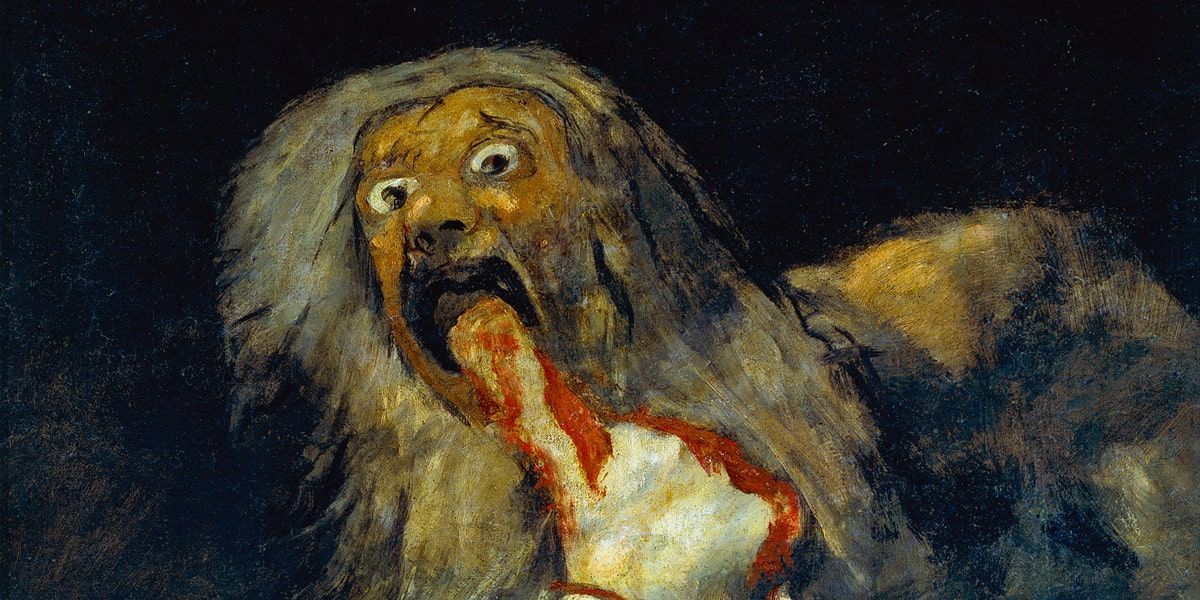 Francisco Goya, Saturn Devouring His Son, c. 1820. Museo del Prado, Madrid.
Regurgitating a regurgitation of a regurgitation and the average will keep getting more average. The seven is a ceiling that the machine cannot break through on its own (for now).
So if generating anything is free, it means curation becomes a new core skill. The distance between a seven and a nine becomes the entire product and competence. And there, in that distance, is what I think more and more people start to call “taste”. Aka the ability to evaluate quality based on your own judgment and experience. Which is very subjective, because taste is personal.
My Italian neighbour wearing his epic mullet haircut honestly thinks he’s being super fashionable and has good taste. I’d respectfully disagree with him but no one has the taste monopoly. So how do you measure it? It’s complicated. One way is your ability to look at ten different outputs and know which one you keep, which three you revise, and which six you trash.
There is a cognitive reason this is so hard. Evaluation and generation are contradictory processes. The part of your brain that produces options and the part that judges them interfere with each other when they run simultaneously. So we get confused. Most organisations, especially in marketing where you are doing like 10 jobs at once, ask one person to do both at the same time. The result is cautious work that offends nobody but moves nothing. So everything online starts to look the same and tends to the 7 (or less).
Taste, at its biological core, is a pattern recognition system. It is a highly complex cognitive algorithm that your brain builds over years of exposure. And just like an AI algorithm, the accuracy of your internal taste algorithm depends entirely on the quality and volume of the “training data” you feed it. But we will make a dedicated article on that, for now let’s see which skills we are talking about:
1. Pattern recognition across domains
Steve Jobs debated washing machine design with his family every evening for two weeks before buying one. Two weeks. For a damn washing machine. Night after night, he and his family weighed trade-offs. “Did we care most about getting our wash done in an hour versus an hour and a half? Or did we care about our clothes feeling really soft and lasting longer?” he recalled. His taste had become so articulated that he could not make even a domestic purchase without running it through the same pattern recognition he applied at Apple. He was as difficult to work with as he was precise. Each evaluation sharpened his thinking for the next one. Jobs applied one “quality” lens everywhere. I built mine by collecting lenses from everywhere.
I had some feedback after job -no pun intended- interviews where the company told me I was not specialised enough. And I never understood what that meant, it didn’t make sense. I believe that business advantage belongs to generalists or “orchestrators” who hold simultaneous competence across multiple domains, could be technology, product, distribution, and human behaviour. They recognise patterns across these areas, so they can design entire systems rather than just operating one component.
I spent a year in Shanghai before the pandemic for my PBA, where we had a project with AXA to help Filipino fishermen get parametric insurance using blockchain based on typhoon public data. Then moved to Paris at the Canal+ Brand Factory, working on TV, digital, print and cinema campaigns. Then I started a consulting impact company with a friend right when the pandemic started. Then worked for the Netflix for dentists, right before developing the marketing and brand for a startup pitching LVMH, Alfa Romeo and Decathlon on customer loyalty, 3D AR products and digital collectibles. I’ll stop there I think you get the point now.
Insurance taught me risk framing. The agency “post-it” brainstorming taught me editorial and award-winning copywriting for national campaigns. Luxury taught me how desire operates at the highest price points. My “scattered” resume and all the countries/places i had the chance to live in ARE my training data.
This allows me to identify the root cause of a business roadblock quickly rather than just treating its symptoms when it’s there. or to see a pricing structure in an architecture. To spot a rhythm problem in an important sales deck. A typography principle that can solve an onboarding flow. When you have that skill, your reference library is way, way wider than your job title and you reach for it unconsciously before you are even asked.
Generally, you do that naturally.
2. Quality discrimination at speed
You can tell whether something is good in under ten seconds.
The full evaluation takes longer of course. But the initial sorting is often immediate: keep, revise, discard. Hand someone ten versions of a headline. Time them. The person with taste discrimination picks the best three in under a minute and will try it out. The person without it deliberates for fifteen minutes and picks the safest option.
I said that every AI tool produces a seven. The taste layer is the small distance between seven and nine. That distance requires speed because the volume of output is now totally inhuman. If I wanted, I could generate you 1000 totally different headlines in a few minutes. You will review more creative work this year than a 1990s creative director reviewed in a decade. The filter needs to be fast, accurate and trained on enough bad work to know what bad looks, or feels, like before you can articulate why.
3. System design for humans
This is the skill I may be worst at, by the way. I have ADHD, so my brain wants to ADD features. ALL. THE. TIME. Just look at this website, it’s a V 1.0. It’s NOT supposed to have 4D tesseracts and a Daft Punk 404 page (what, you haven’t seen it?) Every system I design starts with “this is obvious, calm and clean” and ends with fourteen toggles and a settings panel that requires a tutorial.
Then I catch myself. And I simplify as much as I can, for both myself and the end user. This matters more as AI tools let us design increasingly complex systems. The value is in what I learnt building the wrong thing first. We value the friction of craft.
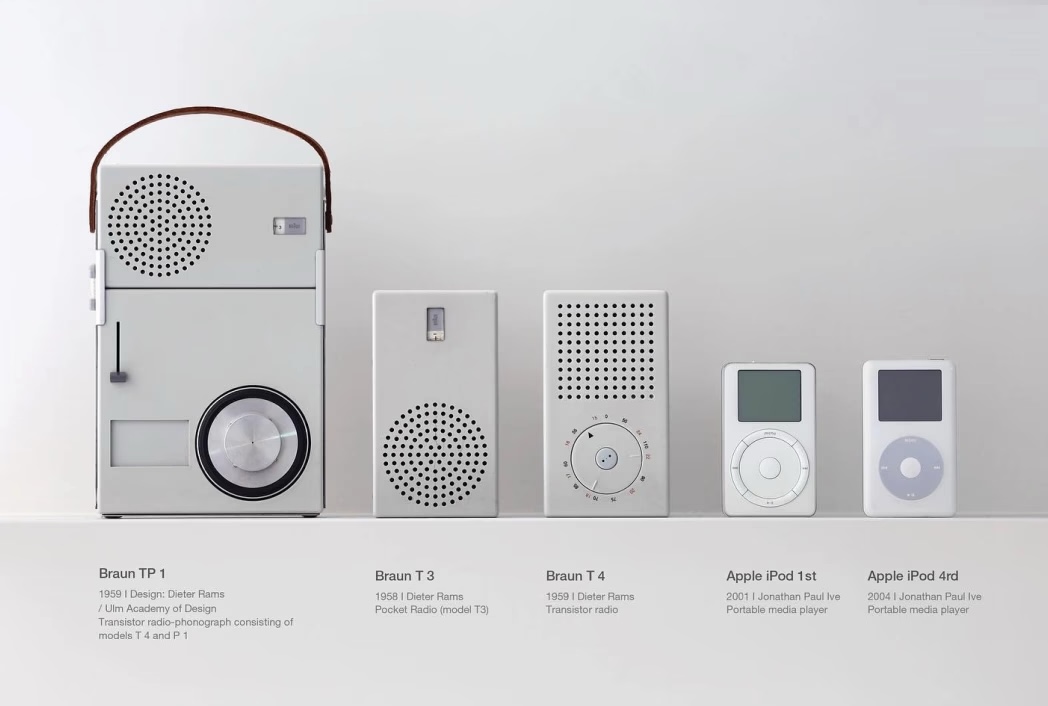
The test is watching someone use your system for the first time without help. If they need to ask a question in the first three minutes, the system failed. If they complete the task and say “that was obvious,” the system succeeded. In the taste economy, invisibility is the highest compliment a system can receive.
4. Editorial judgment
Knowing what to cut. The hardest skill on this list because it requires you to delete work that is good. A sentence that is well-written yet does not serve the piece. A copy that is clever and confuses the user.
I learnt this at Canal+ in Paris, watching the amazing creative team brainstorming content ideas that had to fit rigid time slots. If the segment was two minutes and thirty seconds and the slot was one minute and fifteen seconds, something had to go. Some crazy good ideas had to be removed. You had to find that moment that was good and yet not essential, the line that was clever and not structural. The pressure is almost physical. You have to make the cut with your stomach. That’s why Director’s Cuts exist in the first place I guess.
Give someone a 2 000-word draft and ask them to cut it to 1 200. The person with editorial judgment cuts the weakest 40% and the piece gets stronger. The person without it cuts evenly from every section and the piece gets shorter.
Paul Graham observed that good design looks easy, the way great athletes make their sport look effortless. The easy, conversational tone of good writing comes only on the eighth rewrite. Editorial judgment is what happens between the first draft and the eighth. It is the willingness to kill your favourite sentence because the piece is better without it. AI has no favourite sentences. Well, except the “This is not X but Y” stuff. That is why AI has trouble to edit: it has nothing to LOSE. It won’t be mocked or get in trouble. Because it has no meaning, no real purpose.
Meaning cannot be manufactured. It is found in the friction, in the specific cost of killing your best sentence because the piece needs it gone. AI does not know what it costs to delete a good idea.
That cost is the whole skill.
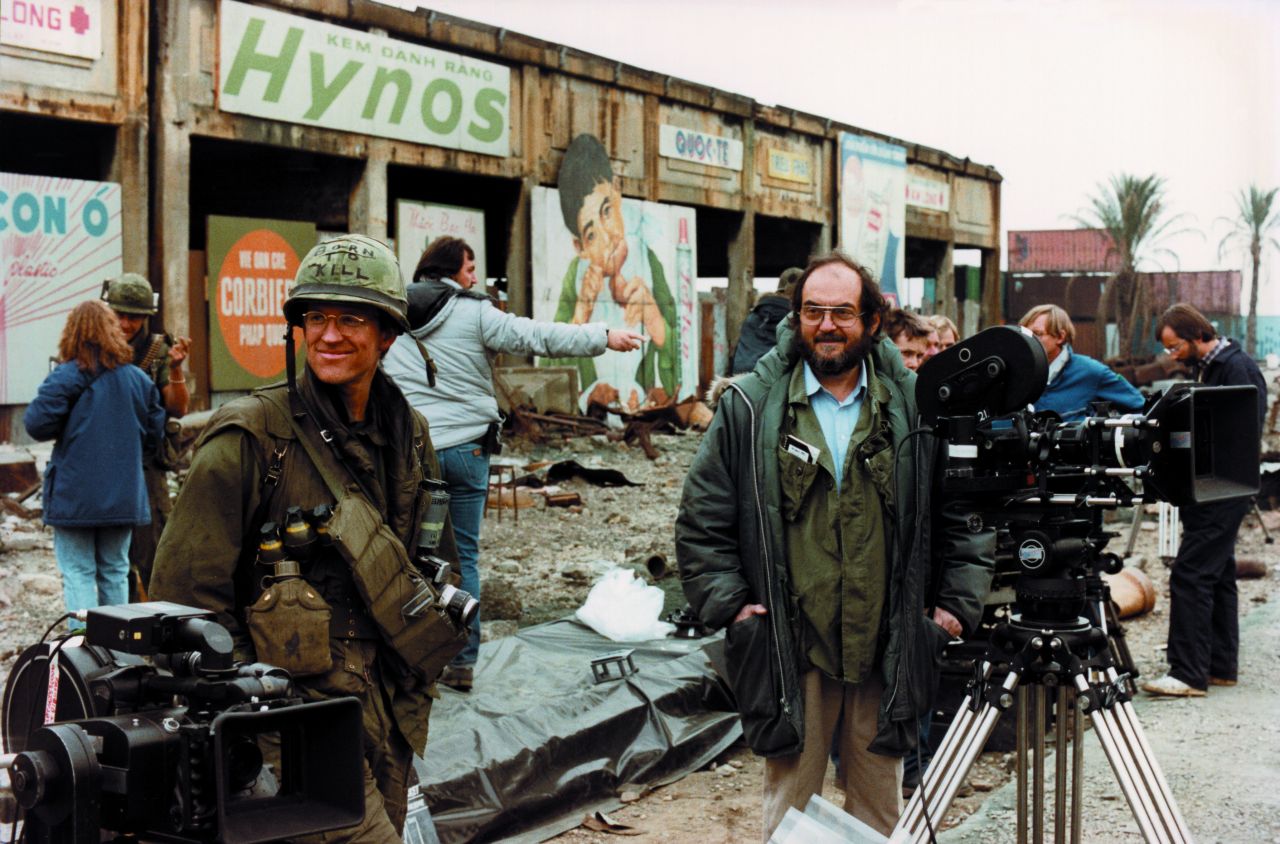 Stanley Kubrick on the set of Full Metal Jacket, 1987. The man who shot 70 takes and kept one.
5. Brand voice fidelity
Strip the logos from three pieces of content from three different brands. Can you tell which belongs to whom? If they are interchangeable, nobody invested in this skill.
I remember one Tuesday, midnight, rewriting the same paragraph for the sixth time because it sounded right for developers and wrong for the brand. Two audiences. Two vocabularies. Two completely different trust mechanisms. The shortcut is always the same: write something generic and let’s hope nobody notices! But somebody notices. Somebody always notices. I think a good brand voice nowadays possesses a very subtle flair, or underlying humour that radiates supreme confidence.
Every AI tool can approximate a brand voice. The output sounds vaguely right, the way a cover band sounds vaguely like the original (well, sometimes it can be better) Voice fidelity under pressure means holding the brand steady when the deadline, the client, and the market all want you to take shortcuts “don’t worry, deliver that slop and let’s make the stakeholders happy”. That’s how you’ll kill your brand brick by brick.
The rejection portfolio
If you’re hiring, try to swap one of your interview questions.
The old question: “Show me your best work and tell me how you made it.” The new question: “Show me something you rejected and tell me why.”
The first question will test your candidate’s production skill. The second will test taste. The thing you chose not to release to the world reveals more about your judgment than the thing you chose to show. The rejection becomes the evidence. Your portfolio online is only what is left, the survivor of the thousand ideas you killed, now archived on your external drive maybe for ever.
If there is no experience embedded in creation, the creation looks like a gift with dazzling wrapping paper but nothing inside. AI produces those gifts at scale. The thing that will make yours different is the thousand hours of bad decisions behind it, and your personality behind it.
As written in our manifesto, taste is a scar. A thousand bad decisions, slowly hardening into judgment.
You cannot shortcut it, but you can start accumulating these scars today by creating something, anything.